

SEÑAL SIMPLE DE SALIDA DE UNA ESTACIÓN
SIMPLE EXIT SIGNAL OF A STATION
La señal de salida está normalmente al centro de la estación, frente a la oficina del movilizador. Para ser accionada el movilizador debe previamente haber sacado un Bastón del aparato Staff y así liberar una llave que es necesaria para dar la vía libre.
The exit signal is normally at middle of the station, front the office of the signalman. To drive it previously should have removed a Staff from the Staffbox and thus to free a key that is necessary to give the free way.
Vistas anterior y posterior de la misma señal / Front and rear view of the same signal
Detención / Stop
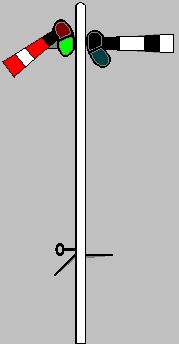
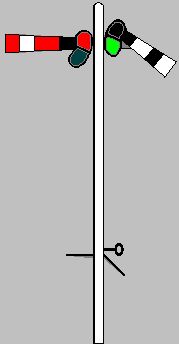
El tren puede avanzar, pero sólo si el maquinista tiene en su poder el Bastón está autorizado para seguir hasta la Entrada de la Estación siguiente. Si se trata de maniobras no se le entrega el Bastón al maquinista (pero debe ser sacado del aparato y accionada la señal), y el tren está autorizado para pasar el último cambio sólo por la distancia que exija la maniobra.
The train can advance, but only if the operator has in its power the staff is authorized to continue to the Entrance of the following Station. In shunting the staff is not given to the train driver, and the train is authorized to pass the last turnout only by the distance that need the shunting.
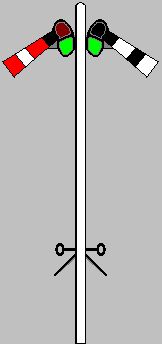
Dos trenes en la estación pueden avanzar, uno en cada sentido, pero sólo si tienen Bastón pueden seguir a Estación siguiente. Si se trata de maniobras no se entrega Bastón, y el tren está autorizado para pasar el último cambio sólo por la distancia que exija la maniobra.
Two trains in the station can proceed, one in each way, but only if they have staffs they can continue to the following Station
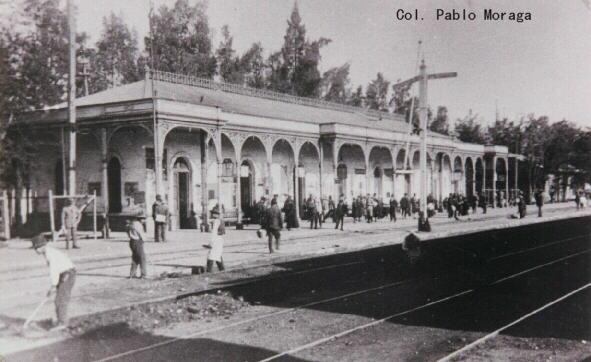
Ejemplo de las primeras señales de dos aspas se ve en la estación San Bernardo en el siglo XIX
One of the first two arms signal in San Bernardo Station in the 19th Century
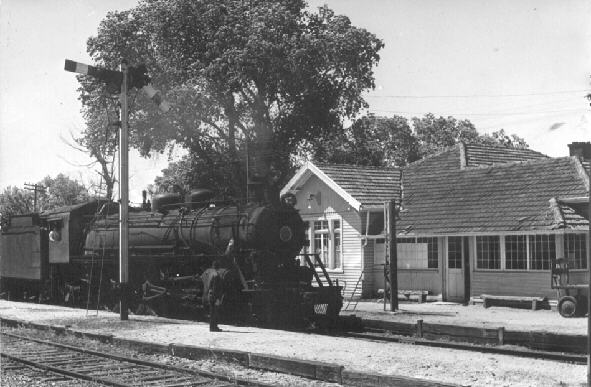
El maquinista con su locomotora a vapor ya movilizados para continuar viaje en Rihue.
The driver with his steam locomotive ready to continue trip in Rihue.

El Buscarril de servicio 308 movilizado en la estación Menque, en el ramal de Rucapequén a Concepción.
Buscarril 308 movilized at Menque station, in the Rucapequén to Concepción branch.
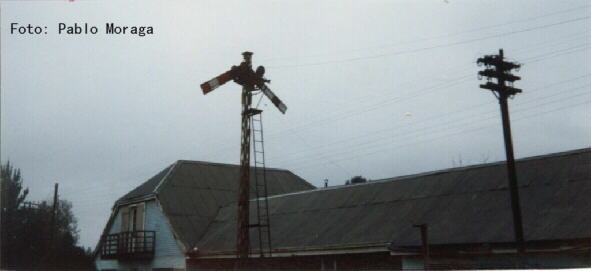
En Pichi Ropulli la señal muestra 2 trenes movilizados simultaneamente
At Pichi Ropulli the signal shows 2 trains movilized at the same time
En las estaciones terminales las semáforas son de un aspa / In terminal stations de signals have only one arm.


Detención / Stop
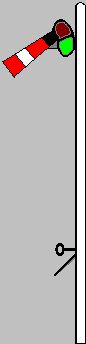
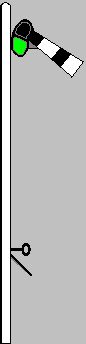
El tren puede avanzar, pero sólo si tiene Bastón pueden seguir a la Estación siguiente. Si se trata de maniobras no se entrega Bastón, y el tren está autorizado para pasar el último cambio sólo por la distancia que exija la maniobra.
Trains can proceed, but only if have the staff it can continue to the following Station
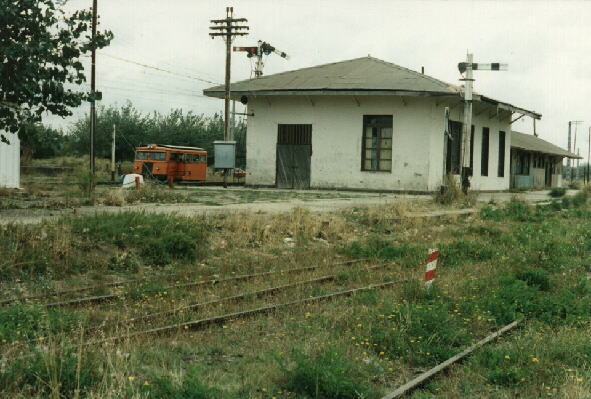
Estación Santa Fé. A izquierda andén Principal con semáfora de dos aspas y Buscarril 308 movilizado, y a derecha andén ramal Santa Bárbara con semáfora de un aspa. Foto: Raúl Moroni
Santa Fé station. At left is the main line with two arms semaphore and railbus, at right Santa Barbara branch with one arm semaphore
Semáforas de un aspa en estaciones terminales de ramales / One arm semaphores at terminal branch stations
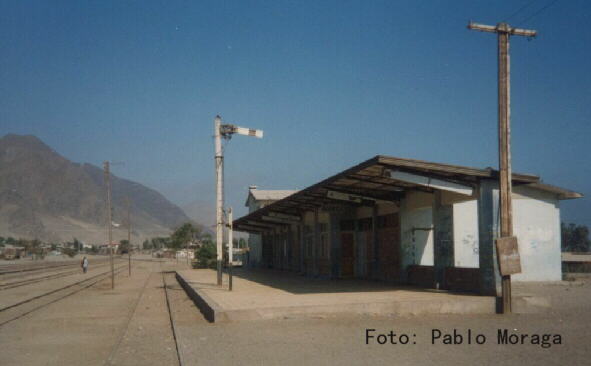
Chañaral, ramal Diego de Almagro-Chañaral
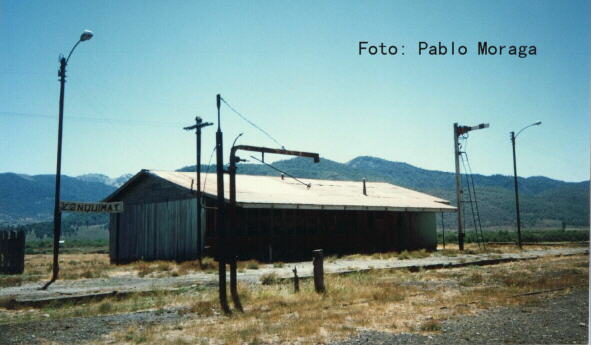
Lonquimay, ramal Púa-Lonquimay
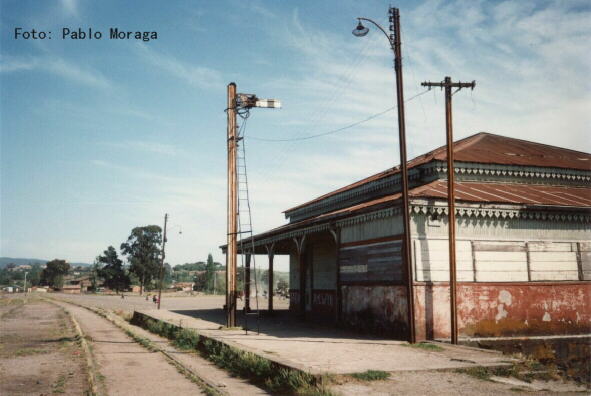
Nacimiento, ramal Coigüe-Nacimiento

Villarrica, ramal Loncoche-Villarrica